
Sunlight zone
Isobath
A deep-sea research centre in Bermuda. Our exhibition takes you 4,000 metres down.
Entry is free, with a timed ticket.
Sunlight zone
0 to 200 m
This is the top 200 metres of the ocean. Below it, there is rarely any significant sunlight.
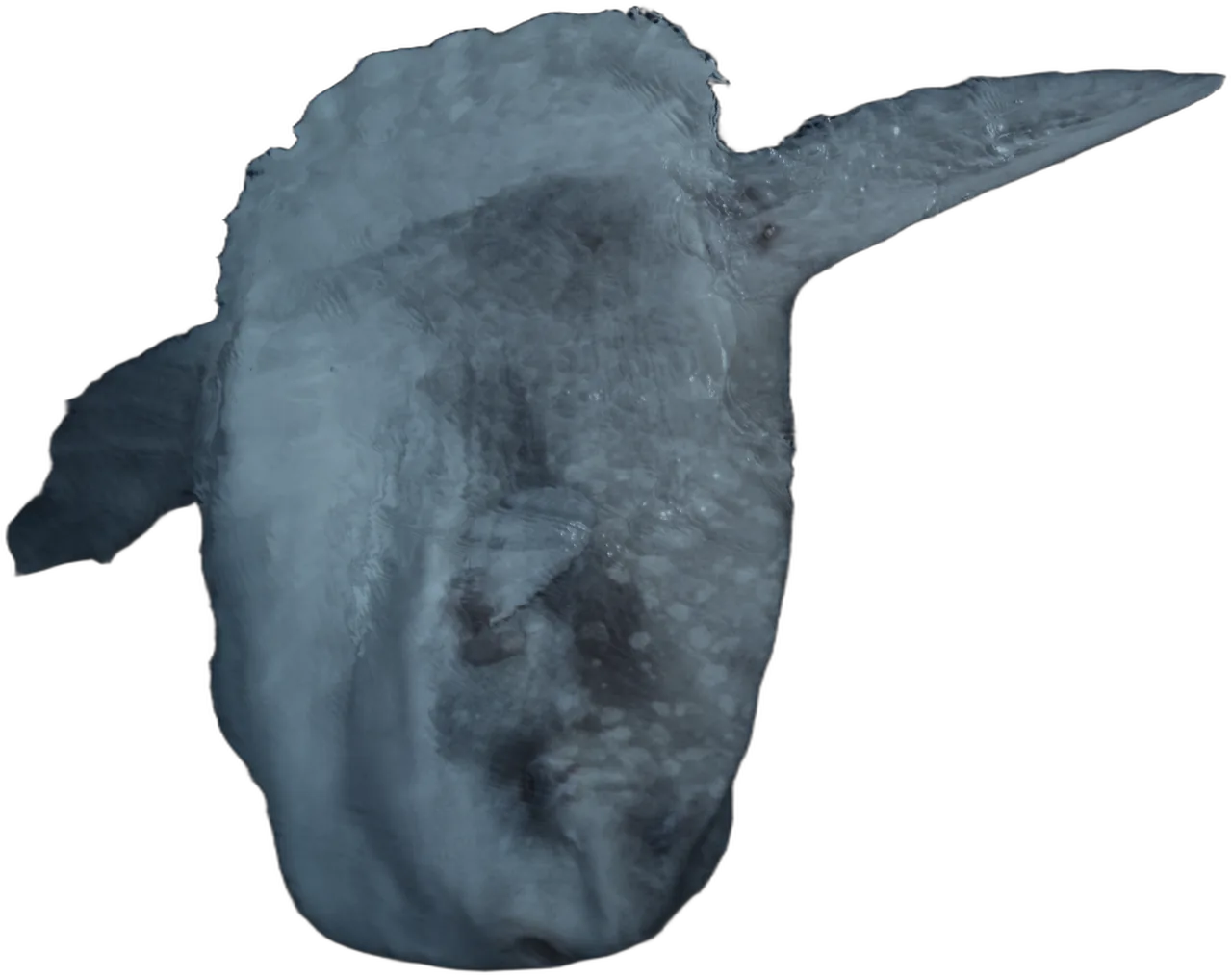
Ocean sunfish
Mola mola
Usually 30 to 70 m
It often drifts on its side at the surface. The heaviest on record weighed 1.3 tonnes.
Twilight zone
200 to 1,000 m
Under the right conditions, sunlight can still reach about 1,000 metres, but it is faint.
Some animals here swim up towards the surface at night and go back down at dawn.
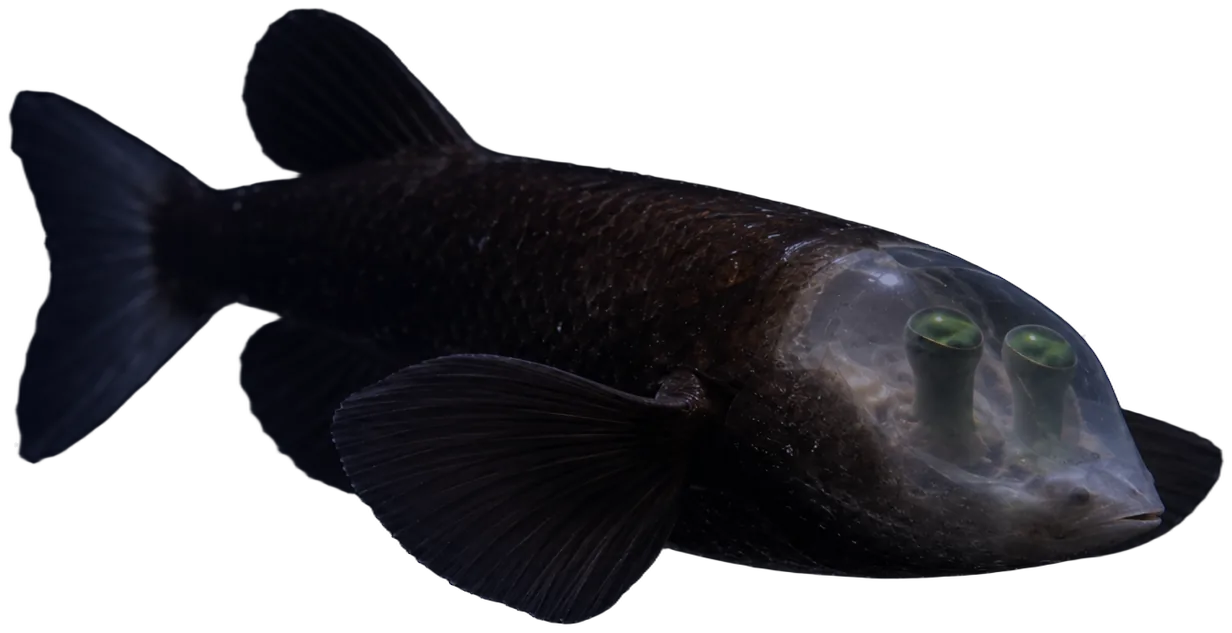
Barreleye
Macropinna microstoma
600 to 800 m
Its eyes sit inside a clear, fluid-filled shield on its head. They can turn to look straight up.
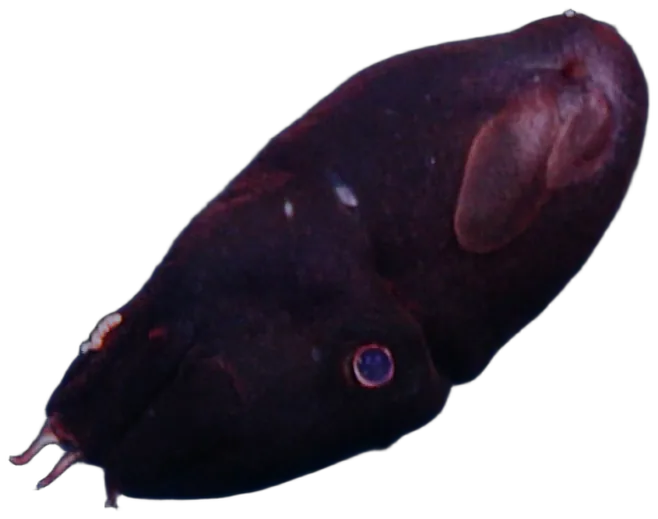
Vampire squid
Vampyroteuthis infernalis
600 to 900 m
It is neither a vampire nor a squid. It eats marine snow, the debris that sinks from above, and the tips of its arms glow blue.
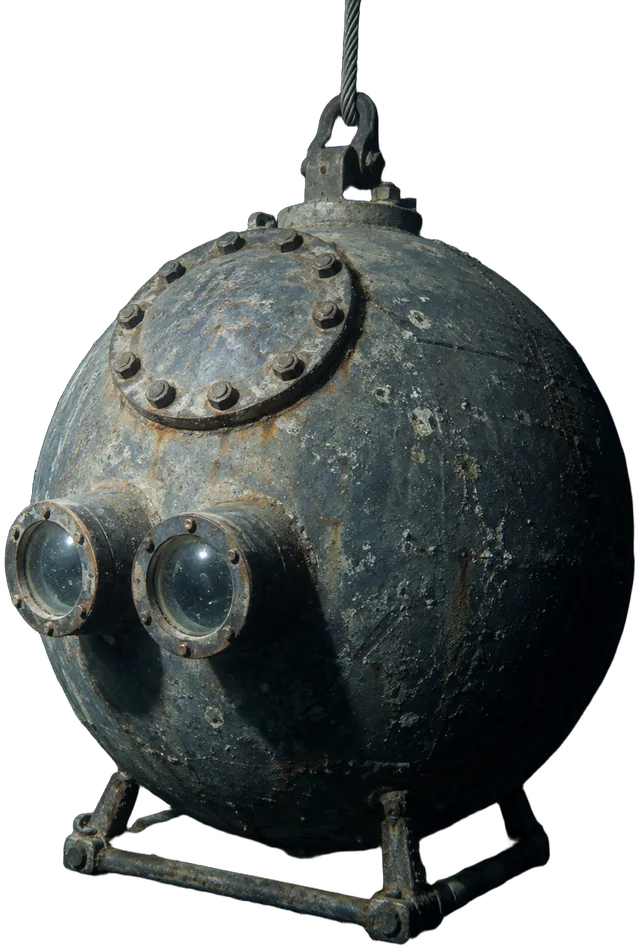
923 metres, 1934
On 15 August 1934, William Beebe and Otis Barton were lowered off Bermuda in a steel sphere hung from a cable. They reached 923 metres.
It was the first deep-ocean dive. You are now as deep as they went.
Midnight zone
1,000 to 4,000 m
No sunlight reaches this far. The water stays at about 4 °C.
The only light here comes from the animals themselves.
In one study off California, 76% of the animals seen between the surface and 3,900 metres could make light.
Move your cursor through the dark.Touch the dark to see it light up.
Under the lamp
Down here, you see only what a light reaches. Move the lamp to look.Down here, you see only what a light reaches. Scroll to bring each animal into the lamp.Down here, you see only what a light reaches.
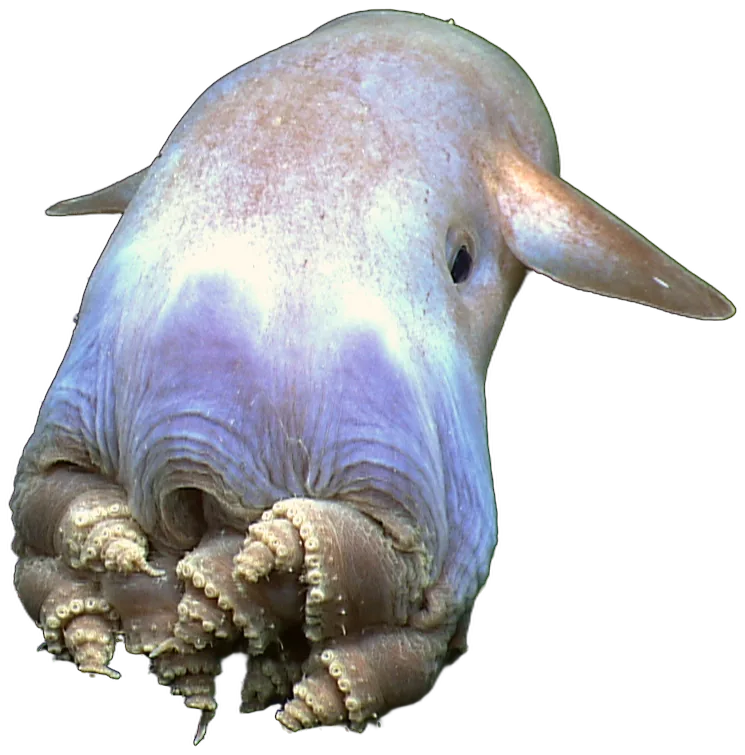
Dumbo octopus
Grimpoteuthis
Seen as deep as 7,000 m
It swims by flapping two ear-shaped fins. One filmed near Wake Atoll at 3,730 metres was almost a metre long.
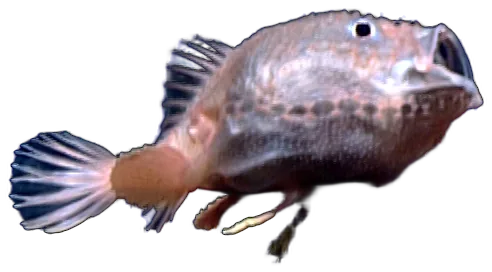
Sea toad
Chaunacops
Seen in Verrill Canyon, off Halifax, Canada
A kind of anglerfish. It wiggles a small lure between its eyes to draw in prey, and usually rests or walks on the seabed on its fins.
4,000 metres
The midnight zone ends here. The water pressure is about 400 times what it is at the surface.
The ocean goes down to 10,994 metres. Our exhibition stops here.
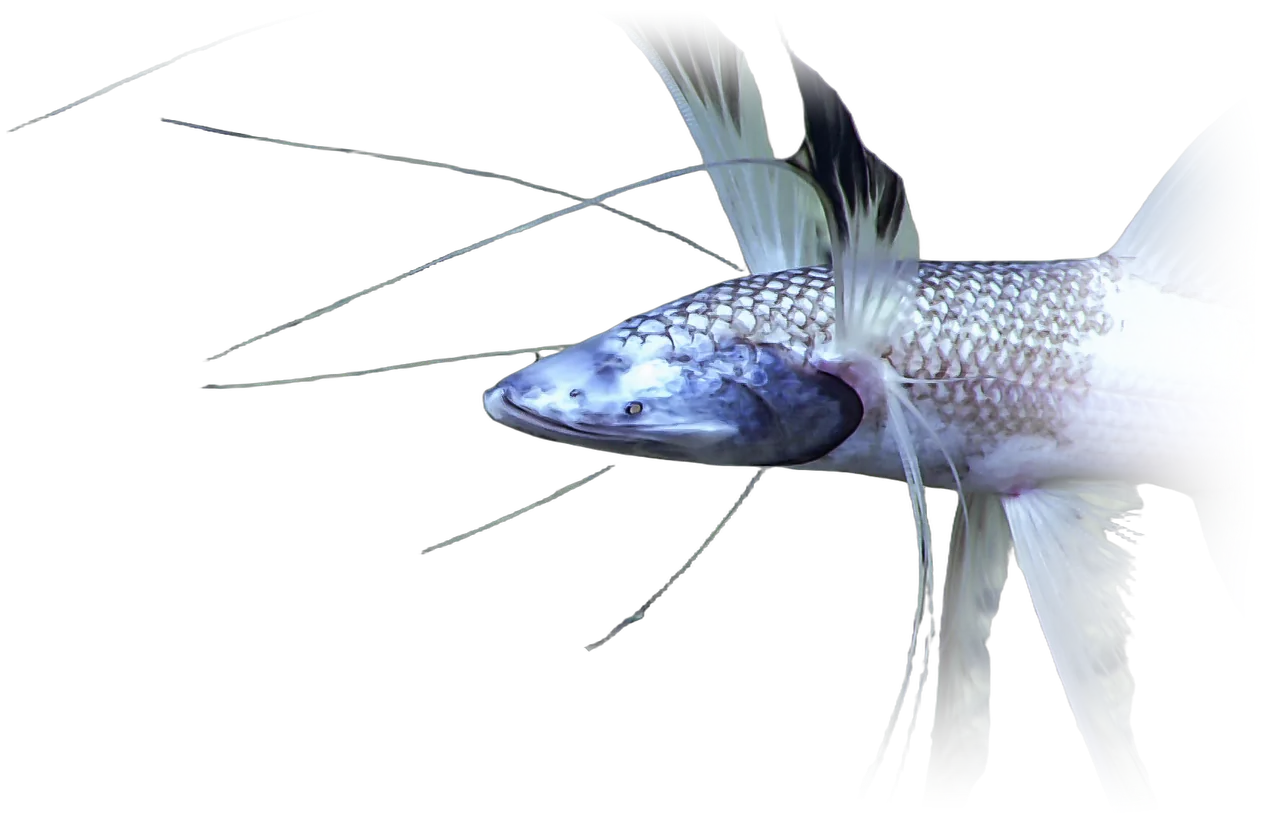
Tripod fish
Bathypterois grallator
878 to 4,720 m
It stands on the seabed on three long fin rays, facing into the current.
Visit the exhibition
The exhibition follows the same descent, room by room. Entry is free, with a timed ticket.